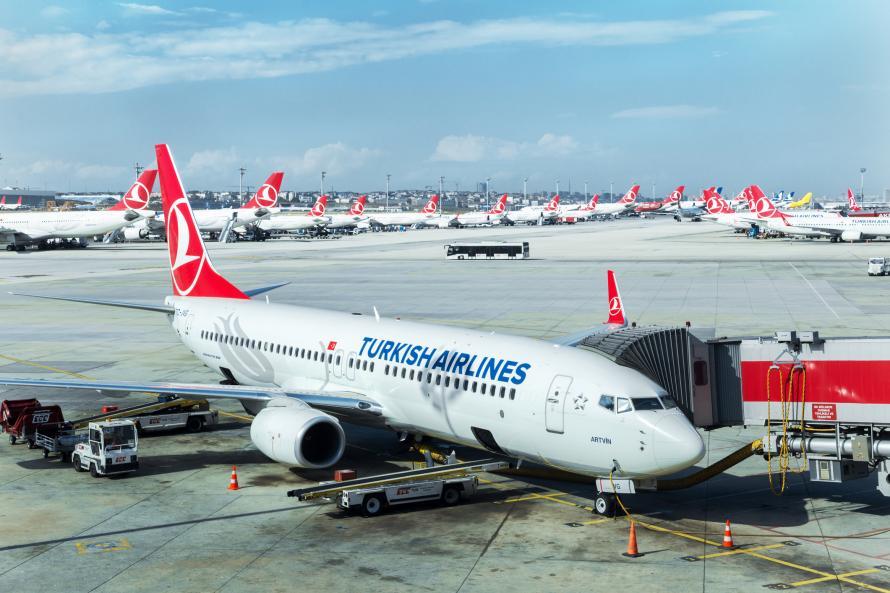
Istanbul, Türkiye, 2 July 2026: Turkish Airlines resumes Middle East flights as the airline continues restoring its regional network following the temporary suspension of services. The carrier has announced the resumption of flights to Abu Dhabi, Dammam, Kuwait, and Bahrain, while also increasing frequencies to Dubai, Amman, and Beirut to meet rising passenger demand.
The latest network restoration strengthens Turkish Airlines’ presence across the Middle East and further enhances connectivity through its global hub in Istanbul.
Turkish Airlines Resumes Middle East Flights to Four Destinations
As part of its phased network restoration, Turkish Airlines resumes Middle East flights to several key regional cities during July 2026.
The revised schedule includes:
- Abu Dhabi: Flights resumed from July 1, 2026
- Dammam: Services resume from July 10, 2026
- Kuwait: Flights restart from July 11, 2026
- Bahrain: Operations resume from July 16, 2026
These resumptions follow the successful restart of Dubai operations earlier this month.
Flight Frequencies Increased Across the Region
Alongside the restored routes, Turkish Airlines resumes Middle East flights with additional capacity on several high-demand routes.
The airline has increased:
- Dubai: From 7 to 14 weekly flights (effective June 25, 2026)
- Amman: From 14 to 21 weekly flights (effective June 19, 2026)
- Beirut: From 21 to 28 weekly flights (effective July 1, 2026)
The additional frequencies provide passengers with greater flexibility while supporting growing business and leisure travel demand.
Improved Global Connectivity via Istanbul
The decision as Turkish Airlines resumes Middle East flights enables travellers across the Gulf and the wider Middle East to reconnect with the airline’s extensive international network.
Operating through its award-winning Istanbul hub, Turkish Airlines offers convenient onward connections to more than 350 destinations across:
- Europe
- Asia
- Africa
- Australia
- North America
- South America
The expanded schedule is expected to benefit both point-to-point travellers and transit passengers.
Supporting Tourism and Business Travel
The restoration of services reflects improving travel demand across the Middle East.
The additional flights are expected to support:
- Business travel
- Leisure tourism
- Family visits
- Religious travel
- Trade and investment
- International connectivity
With stronger schedules, passengers will have improved access to destinations across Turkish Airlines’ global network.
Turkish Airlines Continues Network Recovery
Since resuming operations on several regional routes, the airline has steadily rebuilt its Middle East network.
The latest expansion demonstrates Turkish Airlines’ ongoing commitment to restoring connectivity while responding to increasing passenger demand and market recovery.
Industry observers believe the enhanced schedule will further strengthen Istanbul’s position as one of the world’s leading international aviation hubs.
Key Highlights
- Turkish Airlines resumes Middle East flights to Abu Dhabi, Dammam, Kuwait and Bahrain.
- Dubai services have already resumed.
- Dubai frequencies increase to 14 weekly flights.
- Amman increases to 21 weekly flights.
- Beirut increases to 28 weekly flights.
- Passengers gain access to more than 350 global destinations via Istanbul.
FAQ
Which destinations are Turkish Airlines resuming?
The airline is restoring services to Abu Dhabi, Dammam, Kuwait and Bahrain.
When do the resumed flights begin?
Abu Dhabi (July 1), Dammam (July 10), Kuwait (July 11) and Bahrain (July 16).
Has Turkish Airlines increased flights on other routes?
Yes. Frequencies have been increased to Dubai, Amman and Beirut.
How many destinations does Turkish Airlines serve?
The airline connects passengers to more than 350 destinations across six continents.
Conclusion
As Turkish Airlines resumes Middle East flights, the airline continues rebuilding one of its most important regional networks. The restored services and increased flight frequencies strengthen connectivity between the Middle East and the rest of the world while supporting tourism, trade, and business travel.
With expanded operations through Istanbul, Turkish Airlines is well positioned to meet growing passenger demand and reinforce its role as one of the world’s leading global carriers.