
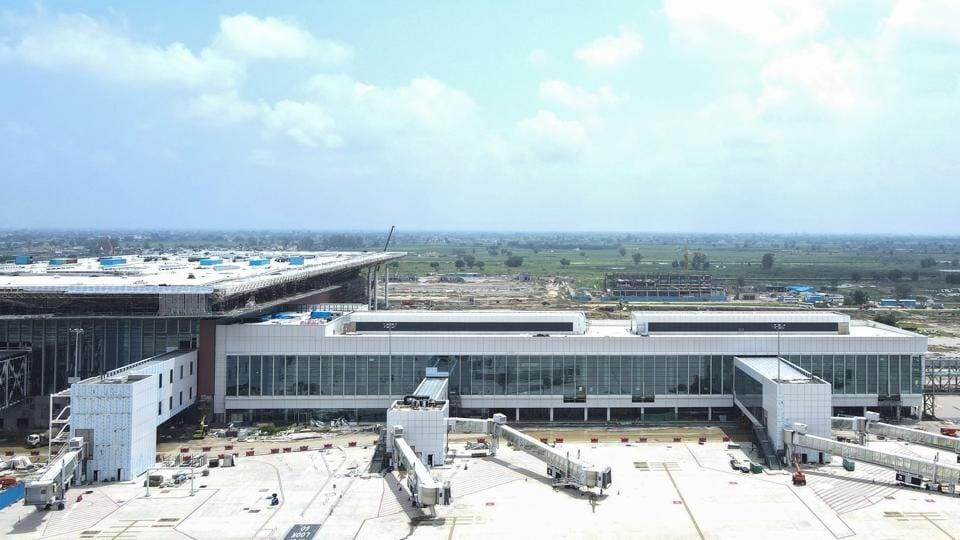
Noida, 22 April: Noida International Airport faces a fresh delay after India’s Ministry of Home Affairs (MHA) rejected a proposal to allow a foreign national to serve as chief executive officer at a greenfield airport, citing aviation security concerns.
The decision has created uncertainty around the launch timeline of Noida International Airport, a key infrastructure project expected to ease congestion at Indira Gandhi International Airport and boost connectivity across northern India.
Noida International Airport Delay After MHA Rejects CEO Rule Change
The airport is being developed and will be operated by Yamuna International Airport Private Limited, a subsidiary of Zurich Airport International AG. The appointment of CEO Christoph Schnellmann, a Swiss national, has become a central issue in securing final regulatory approvals.
Officials confirmed that the Bureau of Civil Aviation Security (BCAS) had sought an amendment to existing rules requiring airport CEOs at greenfield airports to be Indian nationals. However, the proposal was rejected by the MHA, reinforcing strict compliance with aviation security norms.
Security Clearance Emerges as Key Issue
The delay at Noida International Airport is now largely linked to pending security clearance for the CEO. According to officials, approval from the MHA and vetting by BCAS are mandatory before commercial operations can begin.
Without these clearances, the airport cannot proceed with the Aerodrome Security Programme (ASP), a crucial step required for operational readiness. Aviation security guidelines issued by the Bureau of Civil Aviation Security mandate that key leadership roles must comply with national security requirements.
Officials indicated that this clearance process is currently the only major factor holding back the launch, despite the airport being largely ready in terms of infrastructure and systems.
Regulatory Framework Behind the Decision
The issue stems from a 2011 Aviation Security (AVSEC) order, which requires the CEO of a greenfield airport to be an Indian national. The CEO is designated as the security coordinator responsible for implementing and overseeing aviation security protocols.
Efforts to amend this rule date back to 2022, when the issue first came to light. A show-cause notice was issued to the airport operator for non-compliance, and discussions were initiated to revise the rule. However, no final decision was reached until now.
The latest rejection by the MHA effectively closes the possibility of immediate relaxation, placing the responsibility on the airport operator to comply with existing regulations.
Project Progress and Pending Approvals
Despite the setback, Noida International Airport has achieved several important milestones. The airport has already received its aerodrome licence, indicating readiness in terms of infrastructure, runway systems, and operational capabilities.
The project was inaugurated by Prime Minister Narendra Modi, highlighting its strategic importance in India’s aviation expansion plans.
Airport authorities have stated that they are working closely with regulators to secure approval for the Aerodrome Security Programme. Once this is granted, the airport will coordinate with stakeholders to finalize timelines for commercial flight operations.
Impact on India’s Aviation Sector
Once operational, Noida International Airport is expected to significantly reduce congestion in the Delhi-NCR region and improve connectivity for both domestic and international travelers.
The airport is also expected to boost economic activity, generate employment, and strengthen India’s position as a growing aviation hub. However, the delay highlights the challenges of balancing foreign investment with national security requirements in critical infrastructure sectors.
Industry experts believe that resolving leadership compliance issues will be crucial for ensuring a timely launch. The situation also underscores the importance of regulatory clarity for projects involving international stakeholders.
Conclusion
The future of Noida International Airport now depends on how quickly regulatory and security requirements are addressed. While infrastructure and operational readiness are largely in place, the CEO clearance issue remains a critical bottleneck.
Until a resolution is reached, the launch timeline of Noida International Airport will remain uncertain, even as expectations remain high for its role in transforming India’s aviation landscape.