
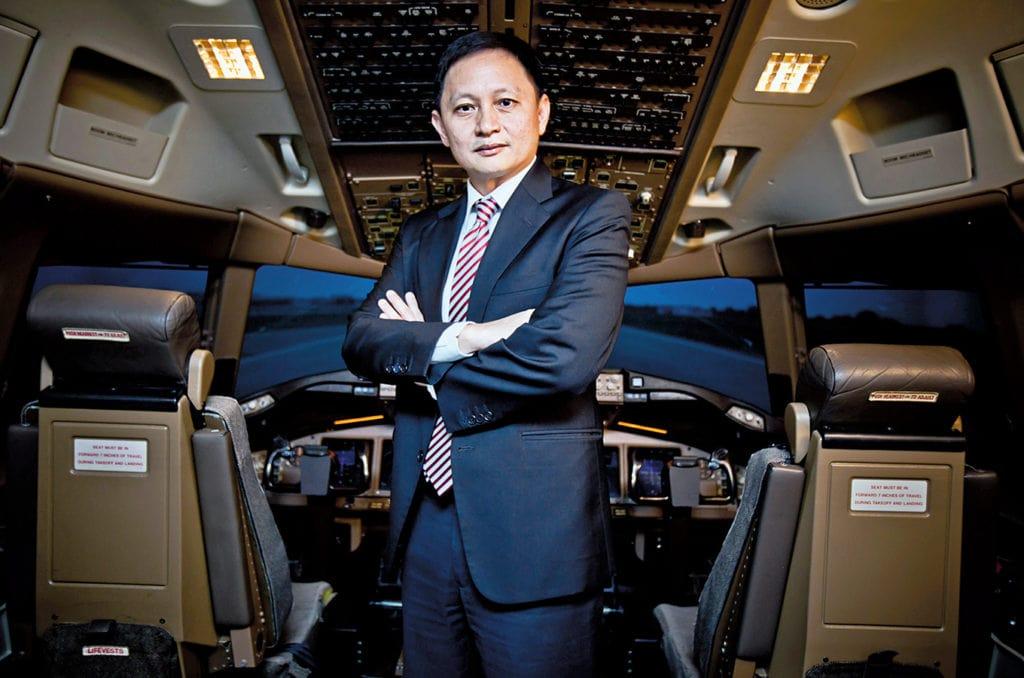
Mumbai, 16 April: In a significant development for the aviation industry, Goh Choon Phong, Chief Executive Officer of Singapore Airlines, held high-level discussions with senior executives of the Tata Group in Mumbai on Thursday. The meeting is expected to focus on the ongoing financial and operational challenges faced by Air India, in which Singapore Airlines holds a 25.1 per cent stake.
Goh Choon Phong arrived at Bombay House, the historic headquarters of the Tata Group, earlier in the day. While official details of the discussions have not been disclosed, industry sources indicate that the talks are centered around Air India’s financial performance, strategic direction, and leadership transition.
The meeting assumes heightened importance at a time when Air India is navigating multiple headwinds. Since its acquisition by the Tata Group in January 2022, the airline has been undergoing an ambitious transformation plan aimed at modernizing operations, expanding its fleet, and improving service quality. However, the path to profitability has proven challenging.
One of the key factors impacting Air India’s performance is the ongoing geopolitical situation in West Asia, which has led to airspace restrictions. The closure of Pakistani airspace for nearly a year has further compounded operational difficulties. These constraints have forced Air India to operate longer flight routes for its long-haul international services, resulting in increased fuel consumption and higher operational costs.
Fuel remains one of the largest cost components for airlines, and even marginal increases in route length can significantly affect profitability. For Air India, these extended routes have translated into substantial additional expenses, putting pressure on already thin margins.
Compounding these challenges is the airline’s leadership transition. Earlier this month, Campbell Wilson announced his decision to step down as Chief Executive Officer and Managing Director. The airline is currently in the process of identifying a successor who can steer the company through its next phase of transformation.
The leadership change comes at a critical juncture, as Air India continues to integrate operations, enhance customer experience, and compete with both domestic and international carriers. Stability at the top will be crucial in executing its long-term strategy.
Another factor that has had a lasting impact on the airline is the tragic AI171 plane crash in Ahmedabad last June, which resulted in the loss of 260 lives. The incident not only affected public perception but also added to the operational and financial pressures faced by the carrier.
According to industry estimates, Air India is expected to have incurred losses exceeding ₹22,000 crore for the financial year ending March 31, 2026. These losses have broader implications, particularly for Singapore Airlines, which has a significant stake in the airline and is directly impacted by its financial performance.
For Singapore Airlines, the partnership with Air India is strategically important, providing access to one of the world’s fastest-growing aviation markets. However, the current financial strain underscores the need for effective collaboration and strategic alignment between the two stakeholders.
Sources suggest that Natarajan Chandrasekaran may also be part of the discussions, further highlighting the importance of the meeting. The focus is likely to be on identifying actionable steps to improve operational efficiency, manage costs, and accelerate the airline’s turnaround.
From a broader industry perspective, the situation reflects the complex challenges facing full-service carriers in a rapidly evolving global environment. Rising fuel costs, geopolitical uncertainties, and intense competition are reshaping the aviation landscape.
For the travel trade, the developments at Air India are particularly significant. As the airline continues its transformation journey, its performance will have a direct impact on connectivity, pricing, and market dynamics in the Indian aviation sector.
The outcome of the discussions between Singapore Airlines and the Tata Group could play a crucial role in determining the future trajectory of Air India. Stakeholders across the industry will be closely watching for any strategic announcements or policy changes that may emerge in the coming weeks.
Follow Travel Trade News social media channels for the latest updates on travel, tourism, aviation, hospitality, and industry news.
To publish your news, press releases, or industry updates, reach out to us at connect@ttnconnect.world