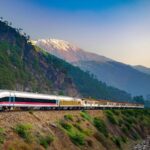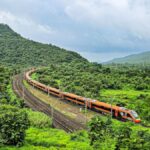

New Delhi, India, 13 July 2026: India Bullet Train 2027 has moved a step closer to reality after the Ministry of Railways announced that phased passenger operations on the country’s first high-speed rail corridor will commence from 15 August 2027. The first section to welcome passengers will be the Surat–Bilimora stretch of the under-construction Mumbai–Ahmedabad High-Speed Rail corridor, marking a landmark moment in India’s transportation history.
The announcement represents a major milestone for the country’s ambitious high-speed rail programme and is expected to transform domestic travel by significantly reducing journey times while improving connectivity between major cities. Developed using Japan’s world-renowned Shinkansen technology, the project also reflects the growing partnership between India and Japan in modern transport infrastructure.
India Bullet Train 2027 to Begin with Surat–Bilimora Section
The Ministry of Railways confirmed that passenger services will be introduced in phases rather than waiting for the entire corridor to be completed.
The Surat–Bilimora section in Gujarat will become the first operational stretch, allowing passengers to experience high-speed rail travel while construction progresses on the remaining sections of the corridor.
Railway Minister Ashwini Vaishnaw shared the update through social media, describing the development as an important milestone for India’s first bullet train project.
The phased commissioning strategy is expected to help operational teams gain valuable experience while enabling travellers to benefit from high-speed services at an earlier stage.
Mumbai–Ahmedabad High-Speed Rail Project Progress
The Mumbai–Ahmedabad High-Speed Rail (MAHSR) corridor is India’s first dedicated bullet train project and spans approximately 508 kilometres.
Implemented by the National High Speed Rail Corporation Limited (NHSRCL), the project is being developed with financial assistance from the Japan International Cooperation Agency (JICA).
Once the complete corridor becomes operational, trains are expected to travel at speeds of up to 320 kilometres per hour, reducing travel time between Mumbai and Ahmedabad from the current six to seven hours to approximately two hours and seven minutes.
The project is also introducing several advanced railway technologies, modern safety systems and world-class passenger amenities that are expected to redefine long-distance rail travel in India.
High-Speed Rail to Enhance Tourism and Business Travel
The upcoming bullet train service is expected to deliver substantial benefits for both tourism and business travel.
Faster connectivity will make it easier for travellers to explore some of western India’s most popular destinations, including:
- Mumbai’s heritage precincts and coastal attractions
- Surat’s textile and diamond industries
- Vadodara’s royal palaces and museums
- Ahmedabad’s UNESCO-listed Historic City and Sabarmati Riverfront
The reduced travel time is also expected to strengthen business links, encourage same-day corporate travel and improve regional economic integration across Maharashtra and Gujarat.
For the tourism sector, improved accessibility could contribute to higher visitor arrivals, increased hotel demand and greater opportunities for local businesses.
Hyderabad Included in Future High-Speed Rail Vision
Beyond the Mumbai–Ahmedabad corridor, the government has also identified Hyderabad as an important hub for future high-speed rail expansion.
Three proposed corridors have been included in the long-term roadmap:
- Mumbai – Pune – Hyderabad
- Hyderabad – Bengaluru
- Hyderabad – Chennai
Although these routes remain at the proposal stage and require detailed planning and approvals, they demonstrate the government’s broader vision of extending high-speed rail connectivity across multiple regions of India.
If implemented, these corridors would significantly improve travel between major metropolitan centres while supporting tourism, trade and economic development.
Modern Infrastructure for the Future
The Mumbai–Ahmedabad project represents one of India’s most technologically advanced railway infrastructure developments.
In addition to high-speed operations, the project includes:
- Modern elevated rail infrastructure
- Advanced signalling systems
- Earthquake detection technology
- Dedicated high-speed stations
- International safety standards
- Passenger-focused station facilities
The adoption of Japanese Shinkansen technology is expected to provide high levels of safety, punctuality and operational reliability.
Supporting India’s Infrastructure Growth
The bullet train project forms part of India’s broader efforts to modernise transportation infrastructure and improve sustainable mobility.
By reducing travel time between major cities, high-speed rail can encourage greater use of rail transport, reduce dependence on short-haul flights and support environmentally efficient intercity travel.
The project is also expected to generate employment during construction and operations while strengthening India’s engineering and infrastructure capabilities.
Key Highlights
- Phased passenger operations to begin on 15 August 2027.
- Surat–Bilimora will become the first operational section.
- Mumbai–Ahmedabad corridor spans 508 kilometres.
- Maximum operational speed of 320 km/h.
- Developed using Japanese Shinkansen technology.
- Financial assistance provided by JICA.
- Hyderabad identified as a future high-speed rail hub.
- Full corridor expected to reduce travel time to around two hours.
Frequently Asked Questions (FAQs)
When will India’s first bullet train begin passenger services?
Phased passenger operations are scheduled to begin on 15 August 2027.
Which section will open first?
The Surat–Bilimora section of the Mumbai–Ahmedabad High-Speed Rail corridor will be the first to commence operations.
How fast will the trains travel?
The trains are designed to operate at speeds of up to 320 km/h.
Who is developing the project?
The project is being implemented by the National High Speed Rail Corporation Limited (NHSRCL) with Japanese Shinkansen technology and JICA financial support.
Which future bullet train routes have been proposed?
Proposed corridors include Mumbai–Pune–Hyderabad, Hyderabad–Bengaluru, and Hyderabad–Chennai.
Conclusion
India Bullet Train 2027 marks the beginning of a new chapter in the country’s railway history. With phased operations scheduled to start on 15 August 2027, passengers will soon experience high-speed rail travel for the first time in India. As construction progresses and future corridors are planned across other regions, the project is expected to transform domestic mobility, strengthen tourism, improve business connectivity and support India’s long-term infrastructure ambitions.