
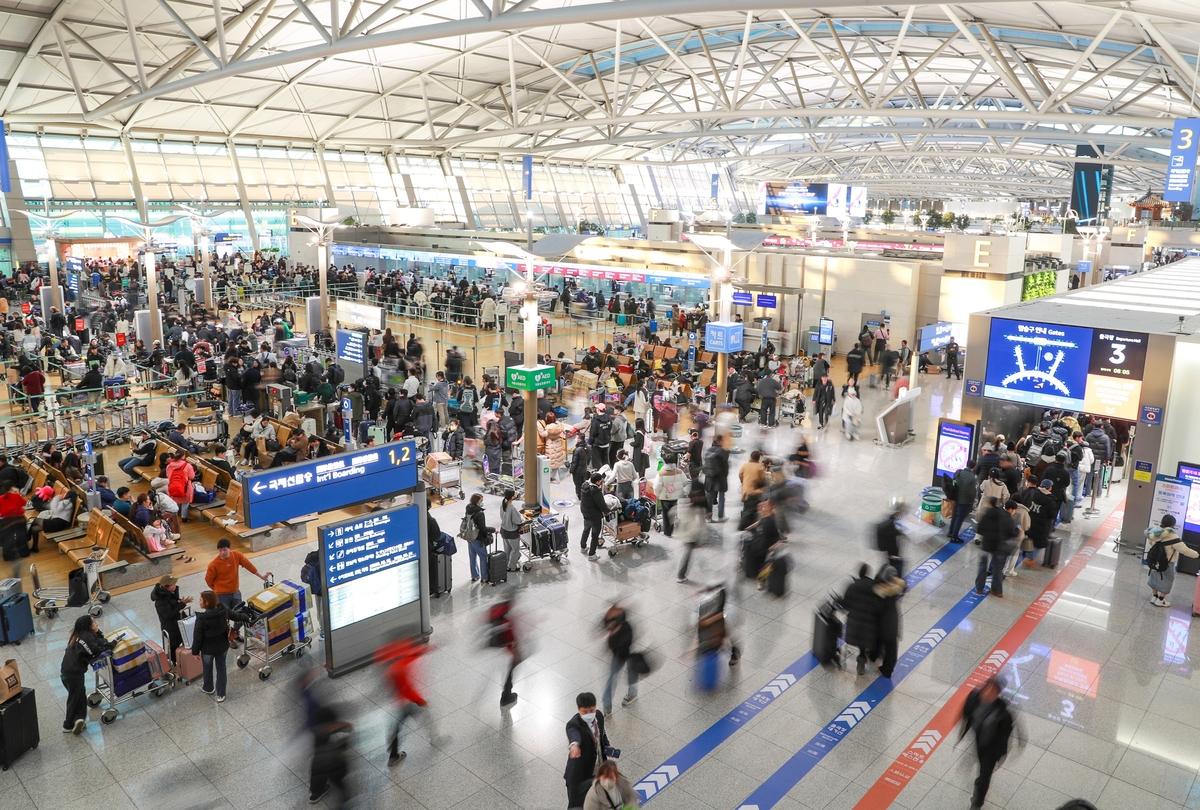
Bengaluru, 16 April: South Korea’s aviation sector is set for a major pricing shift as airlines prepare to impose the highest level of fuel surcharges on tickets issued in May 2026. The move comes amid a sharp rise in global oil prices, driven by escalating geopolitical tensions in the Middle East, significantly impacting airline operating costs.
Leading carriers including Korean Air and Asiana Airlines are expected to implement the revised surcharge structure, with low-cost carriers such as Jeju Air also likely to follow suit in the coming days.
The revised surcharges are based on the Mean of Platts Singapore (MOPS)—a key benchmark for refined petroleum products in the Asia-Pacific region. Between March 16 and April 15, MOPS averaged US$214.71 per barrel, pushing surcharge levels into the top-tier Level 33 bracket, the highest under the current system.
This marks a significant jump from Level 18 in April, representing the steepest month-on-month increase since the pricing mechanism was introduced in 2016. Fuel surcharges are adjusted monthly under a government-guided, distance-based pricing system and are applied based on the ticket issuance date.
For passengers, the impact will be substantial. Korean Air has announced that its international one-way fuel surcharge will rise to between 75,000 won ($50.89) and 564,000 won, compared to 42,000 won to 303,000 won in April. On long-haul routes such as New York, Paris, and London, the surcharge will increase by as much as 86%, reaching the maximum 564,000 won level.
Industry experts note that the timing of ticket purchases will play a crucial role. Since surcharges are determined by the issuance date rather than the travel date, many travelers are expected to book tickets in April to avoid higher costs in May. This could lead to a short-term surge in bookings before the revised rates take effect.
From a broader aviation perspective, the development highlights the continued vulnerability of airlines to fuel price volatility. Jet fuel remains one of the largest operational expenses for carriers, and fluctuations in oil prices can significantly impact profitability, route planning, and pricing strategies.
Airlines may respond by optimizing capacity, adjusting fare structures, and focusing on high-yield routes to offset increased costs. For travel agents and tour operators, this creates an urgent need to advise clients on pricing trends and booking strategies.
Despite rising travel costs, South Korea’s tourism sector is witnessing unprecedented growth. According to data from the Ministry of Culture, Sports and Tourism, the country welcomed 4.76 million foreign visitors between January and March 2026, marking a 23% increase compared to the same period last year and the highest first-quarter figure on record.
China emerged as the largest source market, contributing approximately 1.45 million visitors, followed by Japan with 940,000 arrivals. Taiwan recorded the fastest growth rate at 37.7%, while arrivals from the Americas and Europe rose by 17% to reach 690,000 visitors.
A key driver behind this surge was the massive influx of fans attending a landmark performance by BTS in central Seoul, underscoring the growing influence of K-pop and cultural tourism in shaping travel demand.
Tourist spending also saw a significant boost, with foreign card expenditures reaching 3.21 trillion won (US$2.18 billion)—a 23% increase year-on-year. Additionally, travel satisfaction scores improved to 90.8 points, reflecting enhanced visitor experiences and service quality.
For the travel trade, the situation presents a mixed outlook. While rising fuel surcharges may dampen price-sensitive demand, strong inbound tourism and cultural drivers continue to support overall market growth.
The coming months will be critical as airlines, tourism boards, and travel businesses navigate the dual dynamics of rising costs and increasing demand. Strategic pricing, targeted promotions, and enhanced customer engagement will be key to sustaining momentum in a rapidly evolving travel landscape.
Follow Travel Trade News social media channels for the latest updates on travel, tourism, aviation, hospitality, and industry news.
To publish your news, press releases, or industry updates, reach out to us at connect@ttnconnect.world