
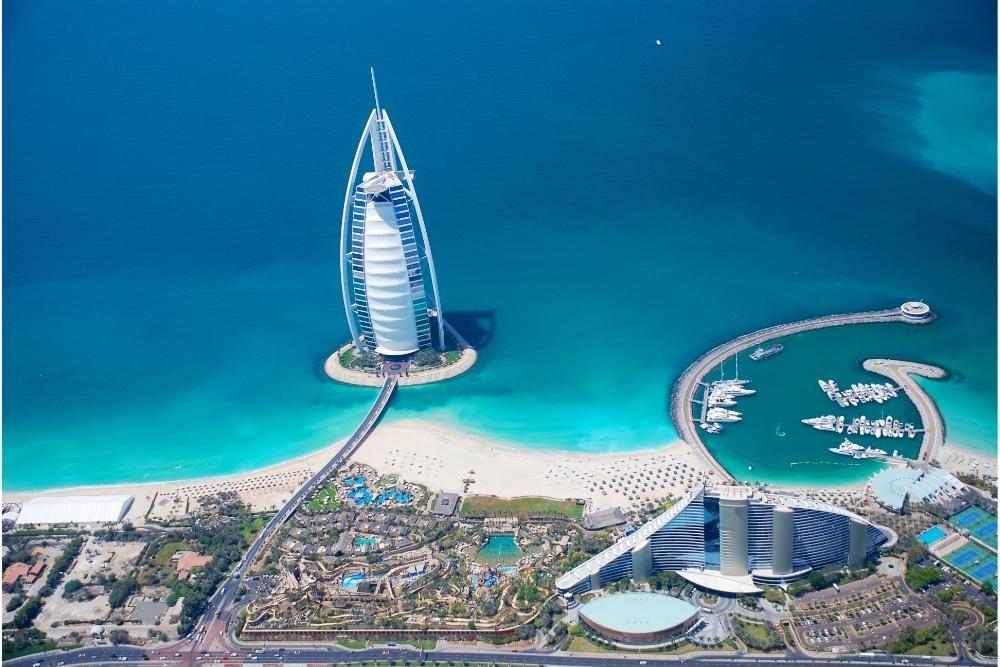
Dubai, 15 April: The legendary Jumeirah Burj Al Arab widely regarded as one of the most iconic luxury hotels in the world—is set to undergo a comprehensive 18-month restoration, marking a new chapter in its 25-year legacy.
Standing tall as a symbol of Dubai’s ambition and opulence, the sail-shaped landmark has long defined the emirate’s global image. Since opening in 1999, it has consistently set benchmarks in ultra-luxury hospitality, earning its unofficial reputation as a “7-star” hotel.
A Strategic Reinvention of a Global Icon
The planned closure is not a reaction to recent minor cosmetic damage caused by intercepted drone debris during regional tensions, but rather a proactive strategic decision aimed at preserving and enhancing the hotel’s global leadership in luxury hospitality.
Leading the transformation is renowned French interior architect Tristan Auer, known for his work on prestigious properties such as Hôtel de Crillon. Auer has described the project as both a creative challenge and a responsibility, emphasising the need to respect the original design vision while elevating it for a new era.
According to Auer, the redesign will not replace the hotel’s signature identity but will reinterpret its essence, ensuring it remains relevant for evolving global luxury travellers.
The Vision Behind the Icon
The origins of the Burj Al Arab trace back to the vision of Sheikh Mohammed bin Rashid Al Maktoum, who sought to create a landmark that would define Dubai on the global stage—much like the Eiffel Tower in Paris or the Sydney Opera House in Australia.
British architect Tom Wright conceptualised the now-famous sail-shaped structure, inspired by a traditional Arabian dhow. Built on an artificial island and rising 280 metres above the Arabian Gulf, the hotel quickly became a symbol of Dubai’s transformation into a global luxury destination.
Engineering Marvel Meets Luxury Experience
Beyond its striking exterior, the Burj Al Arab is an engineering masterpiece. Supported by a steel exoskeleton designed to withstand extreme conditions, the structure combines innovation with opulence.
Inside, the hotel features an all-suite concept with over 200 duplex suites, each designed with Statuario marble, 24-carat gold leaf accents, and personalised butler service. High-end amenities—including private elevators, luxury spas, and bespoke services—have positioned the hotel among the world’s most exclusive hospitality experiences.
Dining experiences are equally iconic, ranging from the sky-high Al Muntaha, suspended 200 metres above sea level, to immersive underwater-themed dining venues.
The property also features a luxury terrace with infinity pools, private cabanas, and access to premium leisure facilities, reinforcing its status as a destination in itself.
Redefining Luxury for the Future
As global luxury travel evolves, expectations are shifting toward more personalised, immersive, and experiential offerings. The restoration of the Burj Al Arab reflects this transition, aiming to blend its timeless grandeur with modern design, technology, and sustainability.
The project is expected to introduce:
- Enhanced suite experiences
- Updated interiors with contemporary luxury elements
- Advanced guest technology and smart systems
- Refined wellness and dining concepts
Industry experts see this move as a strategic reinvestment in brand legacy, ensuring that the property continues to lead in an increasingly competitive luxury hospitality landscape.
Impact on Dubai’s Tourism Landscape
The temporary closure of such an iconic property is expected to have a short-term impact on ultra-luxury accommodation supply in Dubai. However, the long-term benefits are likely to outweigh the disruption, as the relaunch will reinforce the city’s position as a global luxury tourism hub.
Dubai continues to invest heavily in high-end tourism infrastructure, and the transformation of the Burj Al Arab aligns with the emirate’s broader strategy to attract high-net-worth travellers and premium experiences.
Looking Ahead
The reopening of the Jumeirah Burj Al Arab after its 18-month transformation is expected to set new benchmarks in global hospitality.
As one of the most recognisable hotels in the world, its reinvention represents more than just a renovation—it is a statement about the future of luxury travel, where heritage meets innovation.
Follow Travel Trade News social media channels for the latest updates on travel, tourism, aviation, hospitality, and industry news.
To publish your news, press releases, or industry updates, reach out to us at connect@ttnconnect.world