
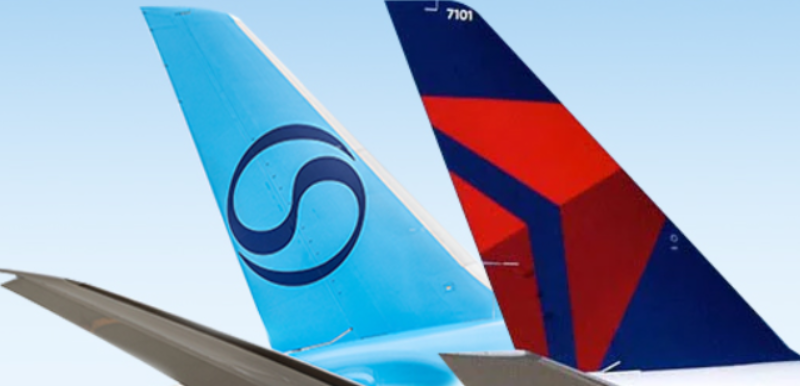
A potential nonstop air link between Austin and Seoul is gaining momentum, as executives from Korean Air and Delta Air Lines recently met with local officials in Austin to քննարկ the feasibility of launching a direct route to Incheon International Airport.
While no official announcement has been made, the development aligns with Austin’s long-term aviation strategy. The city’s airport has consistently identified Seoul as a priority market, ranking it as the second-highest international destination without nonstop service in its March 2026 Air Service Snapshot, just behind Paris.
The business case for the route is strengthening, driven by growing economic ties between South Korea and Central Texas. A major factor is Samsung’s nearly $50 billion semiconductor facility in Taylor, Texas, which is expected to begin operations later this year. Samsung’s longstanding presence in the region further boosts demand for direct connectivity.
Industry observers note that the participation of Korean Air’s senior revenue and pricing leadership in the Austin discussions signals that the talks have moved beyond initial interest into active route planning.
Currently, Korean Air operates daily flights between Seoul and Dallas Fort Worth. If the Austin route is launched, Korean Air is widely expected to be the primary operator. Meanwhile, Delta Air Lines would also benefit through its joint venture partnership with Korean Air, which already facilitates travel for over 2,000 passengers daily between the United States and Asia via Seoul.
Delta has been steadily expanding its presence in Austin, now operating around 55 peak-day departures. A direct Seoul connection would significantly enhance the city’s global connectivity, positioning Austin among a select group of non-hub U.S. cities offering nonstop flights to Asia.
If confirmed, the route would mark a major milestone for Austin’s aviation growth and further strengthen transpacific travel links between the U.S. and Asia.