
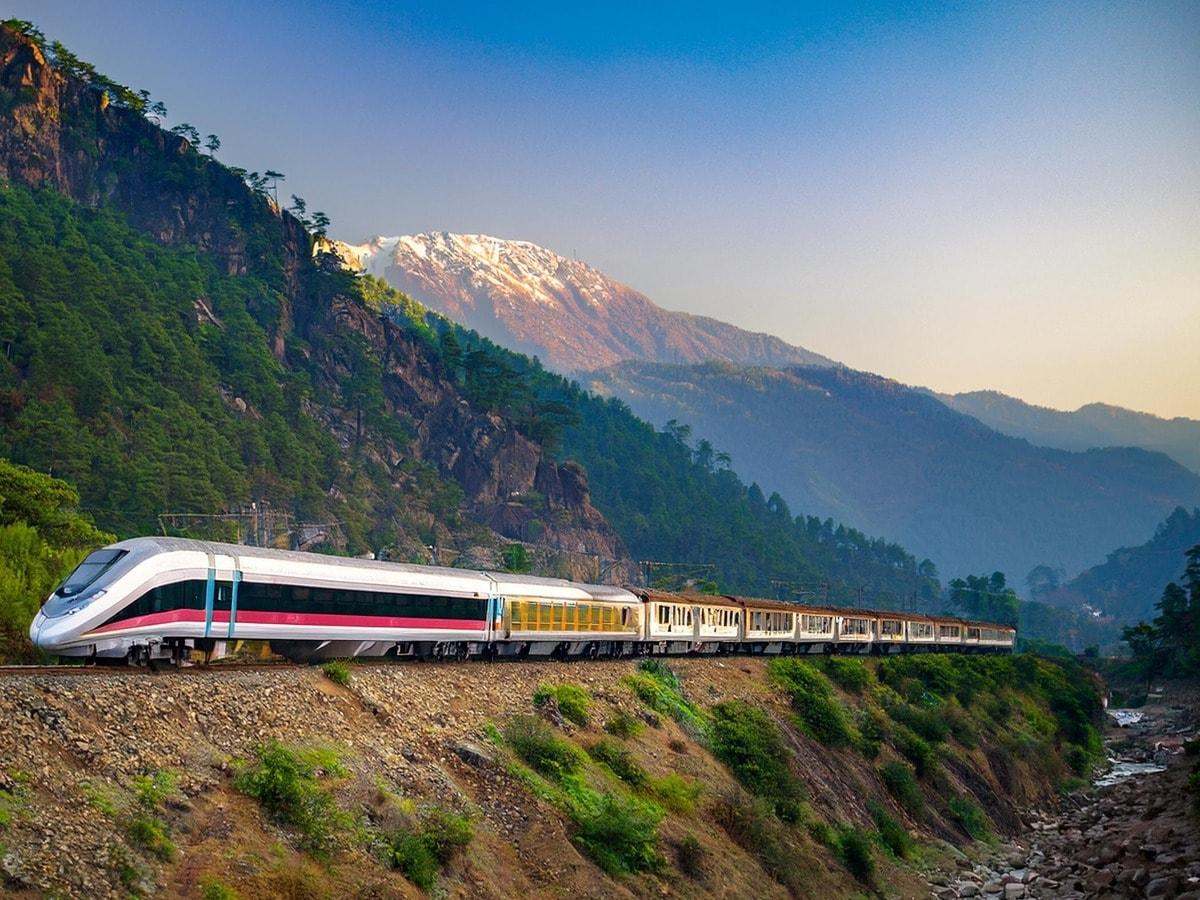
Jammu/Srinagar, 27 April 2026: Rail connectivity in Jammu & Kashmir is set for a major transformation with the launch of the much-awaited Vande Bharat Express service between Jammu and Srinagar. According to an official update published on newsonair.gov.in, the Ministry of Railways has confirmed that operations will begin on April 30.
This development marks a significant milestone in India’s railway infrastructure, particularly for the Kashmir Valley, which has long been regarded as one of the most geographically challenging regions for transport connectivity due to its mountainous terrain and harsh climatic conditions.
Vande Bharat Express Boosts Rail Connectivity in Kashmir
The introduction of the new semi-high-speed train on the Jammu–Srinagar route is expected to significantly improve accessibility and reduce travel time for passengers. It will provide faster, more reliable, and comfortable travel options for both residents and tourists.
Until now, passengers traveling to Srinagar by rail often had to switch trains at Katra after arriving at Jammu Tawi railway station. This additional step added inconvenience, especially for long-distance travelers.
Seamless Travel Experience
With the launch of this service, passengers will now be able to change trains directly at Jammu Tawi, eliminating the need to travel onward to Katra.
As quoted by an official in TNN:
“This extension will put an end to the hassle that passengers heading to Srinagar by rail faced so far…”
This improvement is expected to streamline passenger movement and enhance overall travel convenience.
Engineering Excellence Behind the New Service
Extending modern rail services into the Kashmir Valley represents a major engineering achievement. The region’s rugged Himalayan terrain, seismic sensitivity, and extreme weather conditions have historically posed challenges for infrastructure development.
The successful execution of this project highlights India’s growing expertise in railway engineering and long-term infrastructure planning. Advanced safety systems and modern track technologies have been incorporated to ensure reliable operations in challenging conditions.
Tourism and Economy Boost from Vande Bharat Express
Improved rail connectivity is expected to drive tourism growth across the region. Destinations such as Srinagar, Gulmarg, and Pahalgam will become more accessible to travelers.
Local businesses—including hotels, tour operators, and transport providers are likely to benefit from increased visitor inflow. Better connectivity will also support logistics, reduce travel costs, and create employment opportunities.
In addition, year-round access can reduce seasonal dependency and promote more stable economic development. The improved rail network may also attract new investments in hospitality and tourism services.
Modern Features of the Train
The Vande Bharat Express is known for its modern design, speed, and passenger comfort. Equipped with advanced safety features, ergonomic seating, and improved onboard amenities, it offers a premium travel experience.
Passengers on this route can expect a smoother and faster journey compared to conventional trains, making rail travel more efficient and appealing.
Future Outlook for Vande Bharat Express in Jammu & Kashmir
The launch marks a new phase for rail travel in Jammu & Kashmir. It strengthens integration with the national railway network and supports regional development.
Looking ahead, continued investment in rail infrastructure is expected to further enhance connectivity in northern India. Authorities are also exploring integration with road and air networks to create a seamless travel ecosystem.
Strategic Importance of the Project
Beyond tourism and economic benefits, improved connectivity in Jammu & Kashmir holds strategic importance. Enhanced mobility supports regional integration, improves access to essential services, and strengthens infrastructure in a sensitive border region.
With sustained focus on modernization, the region is expected to witness long-term growth driven by improved connectivity and increased accessibility.